
UFC Bantamweight Champions in Order: Complete History (2010–2026)
The UFC bantamweight division has never been short of drama.
Champions losing their belts to injuries. Bitter rivalries turning into championship wars. Young prospects shocking established legends. And fighters returning years later to reclaim titles that once seemed lost forever.
From Dominick Cruz’s unpredictable footwork to T.J. Dillashaw’s switch-hitting combinations, from Henry Cejudo’s Olympic wrestling to Merab Dvalishvili’s relentless pressure, the 135-pound division has become one of the most technically fascinating weight classes in MMA.
Since the UFC introduced its bantamweight championship in 2010, nine different fighters have held the undisputed title across twelve championship reigns.
And as of November 2026, Petr Yan is back on top after defeating Merab Dvalishvili twice in consecutive championship fights.
Here’s the complete history of every UFC bantamweight champion, the fights that defined their reigns, and how they helped shape the division.
All UFC Bantamweight Champions in Order
Before exploring the stories behind the belts, here’s the full chronological list of undisputed UFC bantamweight champions.
| Champion | Championship reign | Title defenses |
|---|---|---|
| Dominick Cruz | 2010–2014 | 2 |
| Renan Barão | 2014 | 1 |
| T.J. Dillashaw | 2014–2016 | 2 |
| Dominick Cruz | 2016 | 1 |
| Cody Garbrandt | 2016–2017 | 0 |
| T.J. Dillashaw | 2017–2019 | 1 |
| Henry Cejudo | 2019–2020 | 1 |
| Petr Yan | 2020–2021 | 0 |
| Aljamain Sterling | 2021–2023 | 3 |
| Sean O’Malley | 2023–2024 | 1 |
| Merab Dvalishvili | 2024–2025 | 3 |
| Petr Yan | 2025–Present | 1 |
Updated November 4, 2026. Title defenses count successful defenses of the undisputed UFC bantamweight championship. Interim-title defenses are excluded.
Current UFC bantamweight champion: Petr Yan, who reclaimed the championship at UFC 323 in December 2025 and successfully defended it against Merab Dvalishvili at UFC 333 in October 2026.
Two other championship milestones also belong in this history: Renan Barão’s interim reign from 2012 to 2014 and Petr Yan’s interim championship from 2021 to 2022.
How Did the UFC Bantamweight Division Begin?
The bantamweight division wasn’t part of the UFC’s original structure.
When the promotion first introduced weight classes at UFC 12 in 1997, there were only two divisions: heavyweight for fighters weighing 200 pounds or more, and lightweight for those below 200 pounds.
Quite a difference from today’s definition of lightweight, isn’t it?
Back then, smaller fighters still lacked the divisional structure and exposure that modern MMA fans take for granted. That’s where World Extreme Cagefighting, better known as WEC, became important.
As the promotion evolved, WEC developed into a major home for lighter-weight MMA, particularly its bantamweight and featherweight divisions. Fighters such as Dominick Cruz, Urijah Faber, José Aldo, Cub Swanson, Dustin Poirier, and many more, competed under the WEC banner before making their names in the UFC.
WEC also announced plans to introduce flyweight, although that division was not fully established before the merger. The UFC would introduce its own 125-pound division in 2012.
In 2010, the UFC announced that WEC would be absorbed into the promotion, bringing its established bantamweight and featherweight talent into the Octagon. That’s when Dominick Cruz, already the WEC bantamweight champion, became the inaugural UFC champion following his victory over Scott Jorgensen at WEC 53 in December 2010.
The 135-pound division finally had its place on the UFC stage.
And Cruz was ready to show everyone what it could become.
UFC Bantamweight Championship History
☢️ Dominick Cruz (2010–2014): The Original Dominator
Before the UFC bantamweight division had developed its own identity, Dominick Cruz was already building one.
His movement was unlike anything most MMA fans had seen from a champion: Constant stance adjustments, unusual entries, rapid changes of direction, and a frustrating ability to make opponents miss.
Cruz could attack while moving, disappear from the expected countering angle, and return with another combination before his opponent established a stable position.
That unusual rhythm helped him dominate the early bantamweight era.
Successful title defenses under UFC:
- Urijah Faber — UFC 132
- Demetrious Johnson — UFC Live: Cruz vs. Johnson
His victory over Faber settled their rivalry for the moment, while his performance against Johnson demonstrated how effectively he could combine movement, striking, and wrestling.
But Cruz’s first reign eventually faced a problem that no tactical adjustment could solve: Injuries.
Repeated setbacks kept him away from competition, and in January 2014, he was forced to vacate the championship. Just like that, his reign ended outside the cage.
Yet his technical influence remained.
To this day, Cruz’s footwork and unconventional movement are still worth studying, particularly for fighters interested in how positioning and timing can disrupt an opponent’s offense.
🤺 Renan Barão (2012–2014 Interim, 2014 Undisputed): The Champion During Cruz’s Absence
With Cruz sidelined, the division needed someone to keep moving forward. Renan Barão took that opportunity.
The Brazilian defeated Urijah Faber at UFC 149 in July 2012 to capture the interim bantamweight championship. He then successfully defended the interim title twice:
- Michael McDonald — UFC on FUEL TV: Barão vs. McDonald
- Eddie Wineland — UFC 165
Barão was dangerous everywhere: His Muay Thai striking, explosive kicks, submission skills, and physical strength made him an extremely difficult opponent to handle.
As Cruz’s absence continued, Barão was promoted to undisputed champion in January 2014. Then a month later, he stopped Faber in their rematch at UFC 169, recording his first and only successful defense of the undisputed belt.
At that point, Barão looked almost untouchable.
Then came UFC 173 as one of the biggest upsets in bantamweight history.
🐍 T.J. Dillashaw (2014–2016): The Upset That Changed the Division
T.J. Dillashaw entered UFC 173 as a substantial underdog against Barão. Few expected him to win. Even fewer expected him to dismantle the champion the way he did.
Dillashaw constantly changed angles, switched stances, and attacked Barão with combinations that seemed to arrive from unpredictable directions. Barão struggled to establish his usual rhythm.
By the fifth round, Dillashaw had taken control of the fight and finished the champion by TKO.
It was an extraordinary performance, and it introduced a new technical standard at bantamweight.
Successful title defenses:
- Joe Soto — UFC 177
- Renan Barão — UFC on FOX: Dillashaw vs. Barão II
Dillashaw’s style shared some similarities with Cruz’s movement-heavy approach, but his combinations and stance-switching created a different kind of offensive threat.
He could attack from either stance, shift his position during combinations, and force opponents to continually adjust their defensive alignment.
But there was one problem still waiting for him, that was the original champion was coming back.
☢️ Dominick Cruz (2016): The Return of the Dominator
After years of injuries and uncertainty, Dominick Cruz returned to challenge Dillashaw in January 2016.
For many fighters, such a long absence might have marked the end of their championship ambitions, but Cruz had other ideas.
Their fight became a fascinating battle of footwork, timing, and movement. Both fighters used frequent directional changes and unconventional entries, making clean exchanges difficult to establish.
After five closely contested rounds, Cruz won a split decision and reclaimed the title he had never lost inside the cage.
He later defended it against his longtime rival Urijah Faber at UFC 199.
The comeback was complete.
But before the year ended, Cruz would encounter another challenger whose understanding of his movement would produce one of the most impressive performances in divisional history.
💔 Cody Garbrandt (2016–2017): The Night Cruz’s Movement Was Solved
Cody Garbrandt arrived at UFC 207 undefeated, carrying explosive hands, quick combinations, and enormous confidence.
Against Dominick Cruz, he faced a champion whose awkward movement had frustrated elite fighters for years, including his own training coach Urijah Faber.
But Garbrandt didn’t simply chase him. He stayed patient, maintained his balance, and repeatedly found opportunities to counter Cruz’s entries.
When Cruz moved into range, Garbrandt was often waiting with a punch. Several exchanges ended with Cruz missing his target while Garbrandt responded with clean counters.
The performance was remarkable.
Garbrandt dropped Cruz multiple times and won a unanimous decision to become UFC bantamweight champion.
For one night, he had found answers to problems that had troubled an entire generation of fighters. Unfortunately, his reign didn’t last long.
His first title defense came against former teammate T.J. Dillashaw.
And the rivalry was personal.
🐍 T.J. Dillashaw (2017–2019): Rivalry, Redemption, and Controversy
The tension between T.J. Dillashaw and Cody Garbrandt had been building since Dillashaw left Team Alpha Male.
At UFC 217, they finally met with the bantamweight championship on the line.
Garbrandt hurt Dillashaw early, nearly ending the contest in the opening round. Unfortunately for him, Dillashaw survived. That lead to the second round, where T.J adjusted his striking and caught Garbrandt with a head kick before eventually finishing him with punches.
Dillashaw was champion again.
Their immediate rematch at UFC 227 ended with another TKO victory for Dillashaw, giving him his only successful defense during his second reign.
He appeared to be returning to the peak of his career.
Then everything changed.
After moving down to flyweight and losing to Henry Cejudo, Dillashaw tested positive for the prohibited substance EPO.
He voluntarily vacated the bantamweight title in March 2019 and subsequently received a two-year suspension. His legacy remains complicated.
Technically, Dillashaw was one of the division’s most sophisticated strikers, with excellent movement, combination punching, and stance-switching. But his anti-doping violation became an inseparable part of his championship story.
The bantamweight division needed another champion.
And the next contender was already holding gold at 125 pounds.
🥇🥇🥇 Henry Cejudo (2019–2020): Olympic Gold Meets MMA Gold
Henry Cejudo had already built an extraordinary combat-sports résumé before arriving at bantamweight.
An Olympic freestyle wrestling gold medalist at the 2008 Beijing Games, Cejudo later developed into an elite mixed martial artist. He eventually defeated Demetrious Johnson to become UFC flyweight champion, ending one of the greatest championship reigns in UFC history.
But Cejudo wanted another belt.
At UFC 238, he moved up to bantamweight to face Marlon Moraes for the vacant title.
Moraes started strongly with powerful kicks and sharp striking, making the opening exchanges difficult for Cejudo.
As the fight progressed, however, Cejudo closed the distance, increased his pressure, and found success in the clinch. He eventually finished Moraes by third-round TKO, becoming a simultaneous two-division UFC champion.
Cejudo successfully defended the bantamweight title against Dominick Cruz at UFC 249 in May 2020.
Then he surprised everyone by announcing his retirement. He had reached the top of two UFC divisions, added another chapter to his Olympic legacy, and walked away while still champion.
The self-proclaimed “Triple C” had certainly earned the right to celebrate.
🩸 Petr Yan (2020–2021): No Mercy Arrives
With Cejudo retired, the bantamweight championship became vacant again. And at UFC 251, new rising contender Petr Yan faced former featherweight king José Aldo for that vacant throne.
Yan brought a disciplined and punishing style built around boxing, pressure, and increasingly aggressive combinations. Typically, he could spend the early stages of a fight observing his opponent before gradually increasing his output and taking control.
Against Aldo, that approach paid off.
The Brazilian had moments of success, particularly with leg kicks and body attacks, but Yan’s pressure and combination punching eventually became overwhelming.
He finished Aldo by fifth-round TKO to become the new bantamweight champion.
In his first title defense, however, ended in controversy.
At UFC 259, Petr Yan faced Aljamain Sterling.
In the fourth round, Yan landed an illegal knee to the head of a grounded Sterling, leaving the challenger unable to continue. With that action, Yan was disqualified, and Sterling became champion.
A single illegal decision had changed the championship.
🎭 Aljamain Sterling (2021–2023): From Controversy to Championship Legacy
Aljamain Sterling’s championship reign began under circumstances nobody would have wanted.
Winning the belt through Yan’s disqualification immediately brought criticism, accusations, and endless arguments about whether Sterling deserved to be champion.
But the controversy sometimes overshadowed what Sterling actually accomplished afterward.
At UFC 273, he faced Yan again in a title-unification rematch.
This time, there was no disqualification.
Sterling used his grappling and positional control to take Yan’s back during important stretches of the fight, eventually earning a split-decision victory. It wasn’t without debate, but Sterling had now defeated Yan in a completed championship contest.
He followed that victory with two more successful defenses:
- T.J. Dillashaw — UFC 280
- Henry Cejudo — UFC 288
The Dillashaw fight was complicated by the challenger’s pre-existing shoulder injury, which severely limited his ability to defend against Sterling’s grappling. Still, Sterling finished the fight by TKO.
Against Cejudo, he earned another split decision in a competitive tactical battle.
By the end of his reign, Sterling had recorded three consecutive successful title defenses, placing him among the division’s most accomplished champions.
Whatever fans thought about the beginning of his reign, his subsequent performances gave it substantial competitive legitimacy: His combination of wrestling, back control, submission threats, and positional awareness was exceptionally difficult to handle.
But a new generation was approaching.
And one of its most recognizable stars was waiting for his championship opportunity.
🩸 Petr Yan (Interim Champion, 2021–2022)
There’s another detail worth remembering from Sterling’s championship era.
While Sterling was unable to compete because of injury, Yan fought Cory Sandhagen for the interim bantamweight championship at UFC 267.
The two produced an excellent striking contest.
Sandhagen’s movement, combination attacks, and changes in rhythm gave Yan problems, but Yan gradually found success through his counters and increasing offensive pressure.
Yan won by unanimous decision, capturing the interim title. That victory set up his rematch with Sterling at UFC 273.
Although Yan lost the unification fight, his interim reign remains part of the division’s championship history.
🌈 Sean O’Malley (2023–2024): The Sugar Show Takes Over
Sean O’Malley’s rise brought another striking specialist into the championship picture.
With his colorful personality, long-range attacks, and precise counterpunching, O’Malley had already become one of the UFC’s biggest attractions.
But against Aljamain Sterling at UFC 292, he faced the most difficult opponent of his career: Sterling was a dangerous wrestler with excellent back control, and few expected O’Malley to have an easy night.
Then came the second round. As Sterling moved forward, O’Malley caught him with a perfectly timed counter right hand. The champion fell, O’Malley followed up with ground strikes, forcing the referee to stop the fight.
The Sugar Show had reached the top of bantamweight.
He successfully defended the championship against Marlon Vera at UFC 299, winning a dominant unanimous decision.
But his next opponent presented a very different challenge.
One that refused to give him the distance or rhythm he needed to operate.
🦾 Merab Dvalishvili (2024–2025): The Machine Never Stops
Merab Dvalishvili entered his first UFC championship fight with a reputation for relentless wrestling and extraordinary endurance.
He wasn’t known for spectacular knockouts or flashy submissions, but his greatest strength was forcing opponents to work relentlessly.
Against Sean O’Malley at UFC 306, Merab constantly pressured the champion, pursued takedowns, and prevented him from consistently establishing his preferred striking distance. O’Malley struggled to build momentum for the whole fight.
Merab won by unanimous decision and became UFC bantamweight champion.
Then came an extraordinary run of title defenses.
Successful title defenses:
- Umar Nurmagomedov — UFC 311
- Sean O’Malley — UFC 316
- Cory Sandhagen — UFC 320
Against Umar Nurmagomedov, Merab faced an undefeated contender with excellent wrestling and striking fundamentals. After a competitive start, Merab’s pace and pressure helped him take control as the fight progressed.
He then defeated O’Malley again, this time by submission, before overcoming Sandhagen to record his third successful defense of 2025.
Merab became one of the most active champions in the division’s history.
His wrestling was about more than completing takedowns. Even when opponents defended his initial entries, they were often forced to defend again, reset their stance, or surrender valuable time and positioning. That accumulated pressure was the foundation of his success.
For a while, it seemed as though nobody could match his pace.
Until one of his rival returned.
🩸 Petr Yan (2025–Present): No Mercy Reclaims the Throne
Petr Yan had experienced both sides of championship MMA.
He had become champion, lost the belt through disqualification, captured an interim title, and suffered a difficult defeat to Merab Dvalishvili in March 2023.
That first meeting with Merab was particularly frustrating: The Machine pressured him relentlessly, repeatedly attacked with takedowns, and prevented Yan from establishing the striking rhythm that usually made him so dangerous.
Their rematch at UFC 323 in December 2025 was a different story, as Yan came prepared for the pressure.
He worked behind his jab, attacked the body, defended takedowns, and even brought his own wrestling into the exchanges. Rather than spending the entire fight reacting to Merab, Yan created problems of his own.
Merab continued pressing forward, but Yan’s defensive wrestling and accurate striking increasingly limited the champion’s effectiveness.
After five rounds, Yan won by unanimous decision.
The bantamweight title was his again, but their rivalry wasn’t finished.
In October 2026, they met for a third time at UFC 333 in Abu Dhabi, in Yan’s first title defense.
This time, Merab started quickly.
His wrestling pressure and pace caused Yan problems throughout the first two rounds, forcing the champion to spend much of his time defending takedown attempts.
For a moment, it looked as though the Machine had found the answer.
But Yan gradually turned the fight around.
In the third round, his takedown defense began creating more opportunities to strike. He attacked Merab’s body, found cleaner punches, and steadily improved his control of the exchanges.
By the fourth and fifth rounds, Yan was landing the more effective strikes while continuing to resist Merab’s wrestling pressure.
The contest went to the judges. All three scored it 48–47 for Petr Yan.
He had successfully defended his bantamweight championship for the first time. And more importantly, he had now defeated Merab twice after being thoroughly outworked in their original meeting. It’s a fascinating example of how tactical adaptation can change an entire rivalry.
Merab’s wrestling hadn’t disappeared, his pressure was still relentless. Yan had simply become much better at dealing with it.
After everything he had experienced since losing the championship in 2021, “No Mercy” was back on top.
And this time, he had defended the throne.
UFC Bantamweight Championship Records
The bantamweight division has a fascinating championship history, with several fighters holding the belt more than once and multiple reigns ending outside the cage.
| Record | Fighter | Achievement |
|---|---|---|
| First UFC bantamweight champion | Dominick Cruz | Recognized as inaugural champion in 2010 |
| Most consecutive undisputed title defenses | Aljamain Sterling / Merab Dvalishvili | 3 each |
| Most UFC bantamweight title-fight victories | T.J. Dillashaw | 5 |
| Two-time undisputed champions | Dominick Cruz, T.J. Dillashaw, Petr Yan | 2 reigns each |
| First interim bantamweight champion | Renan Barão | UFC 149, 2012 |
| First Olympic gold medalist to win UFC bantamweight gold | Henry Cejudo | UFC 238, 2019 |
| Most recent title defense | Petr Yan | Defeated Merab Dvalishvili at UFC 333 |
Records updated November 4, 2026. The UFC’s title-fight victory statistics include applicable interim championship bouts, while the defense record above counts undisputed championship defenses.
One interesting thing about this division is how rarely champions have been able to build extremely long defensive streaks.
Unlike the featherweight division, which saw José Aldo and Alexander Volkanovski dominate for years, bantamweight has frequently changed hands through competitive rivalries and dramatic upsets.
Three successful defenses have been enough to place a champion among the division’s historical leaders.
That says something about how difficult it has been to remain on top at 135 pounds.
Frequently Asked Questions
Who is the current UFC bantamweight champion?
Petr Yan is the current UFC men’s bantamweight champion as of November 2026.
He reclaimed the title by defeating Merab Dvalishvili at UFC 323 in December 2025 and successfully defended it in their trilogy fight at UFC 333 in October 2026.
How many UFC bantamweight champions have there been?
Nine different fighters have held the undisputed UFC men’s bantamweight championship since 2010.
Dominick Cruz, T.J. Dillashaw, and Petr Yan each held the title twice, bringing the total to twelve undisputed championship reigns.
Who was the first UFC bantamweight champion?
Dominick Cruz was the inaugural UFC bantamweight champion.
He carried the championship lineage from WEC into the UFC following his victory over Scott Jorgensen at WEC 53 in December 2010.
Who has the most UFC bantamweight title defenses?
Aljamain Sterling and Merab Dvalishvili share the record for most consecutive successful undisputed UFC bantamweight title defenses, with three each.
Dominick Cruz and T.J. Dillashaw also accumulated three successful defenses across their separate championship reigns.
Who has held the interim UFC bantamweight title?
Renan Barão captured the interim title in 2012 and was promoted to undisputed champion in 2014.
Petr Yan won the interim championship against Cory Sandhagen at UFC 267 in October 2021 before losing the unification fight against Aljamain Sterling in April 2022.
What is the UFC bantamweight weight limit?
The UFC men’s bantamweight division has a championship weight limit of 135 pounds, approximately 61.2 kilograms.
The Bantamweight Legacy: A Division That Never Stops Evolving
Looking back at the history of the UFC bantamweight championship, one thing stands out: Every era brought a different problem for the next generation to solve.
Dominick Cruz made movement a weapon.
His unusual footwork and timing forced opponents to rethink how they controlled distance.
Renan Barão brought dangerous, well-rounded offense.
His combination of striking, physical strength, and submission skills made him one of the division’s most feared fighters.
T.J. Dillashaw pushed stance-switching and combination striking forward.
His victories over Barão helped redefine what technical striking could look like at 135 pounds, even as his career later became overshadowed by controversy.
Cody Garbrandt showed that even Cruz’s movement could be solved.
For one remarkable night, his patience and counterpunching produced the perfect answer.
Henry Cejudo demonstrated the value of adaptation.
An Olympic wrestler developed into a two-division UFC champion capable of changing tactics when his original approach struggled.
Aljamain Sterling proved the effectiveness of positional grappling.
Whatever controversy surrounded his early reign, his back control and wrestling produced three successful championship defenses.
Sean O’Malley brought precise counterstriking to the throne.
One correctly timed punch against Sterling changed the division.
Merab Dvalishvili made relentless pressure his greatest weapon.
His endless wrestling attempts and extraordinary pace forced opponents into exhausting defensive battles.
Petr Yan has found a way to solve the Machine.
After losing their first encounter, he returned with better defensive wrestling, sharper adjustments, and enough patience to overcome Merab twice.
That’s what makes bantamweight such an interesting division to study. Every new champion brings a different system. Every challenger looks for the weakness in it. And eventually, somebody finds an answer.
From Dominick Cruz in 2010 to Petr Yan in 2026, the division has become a history of rivalries, technical evolution, and fighters learning how to defeat what once seemed unbeatable.
At 135 pounds, staying champion has often been just as difficult as becoming one.
And the next chapter is still waiting to be written.
Discover more from Data Combat Sport
Subscribe to get the latest posts sent to your email.
Related posts:


Related Posts

The Evolution of UFC Heavyweight Champions: A Glimpse into the Big League
In the very beginning of the UFC, there were no…

UFC January 2026 — A New Beginning of the Paramount Era
January kicked off a stacked UFC slate with two major…
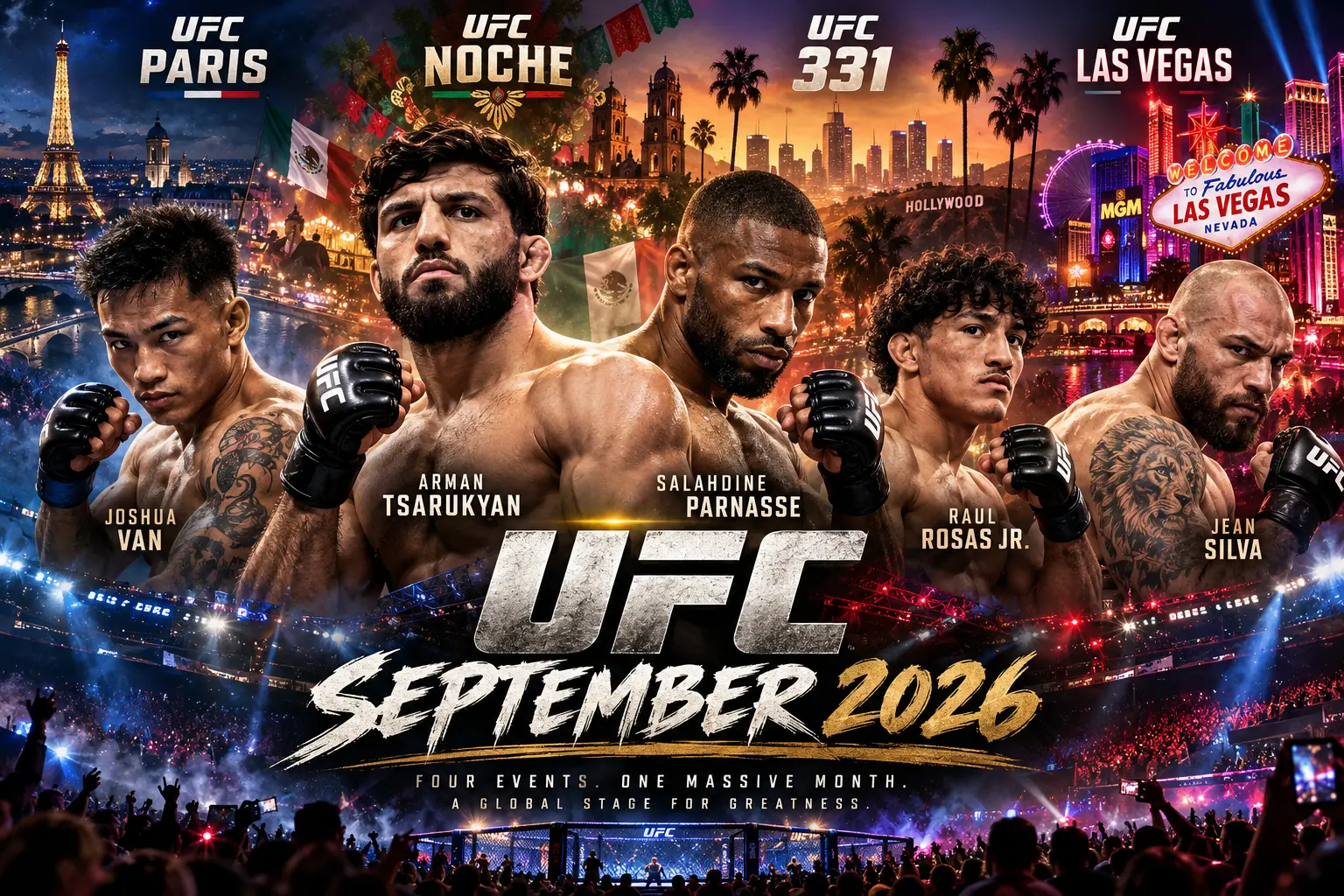
UFC September 2026 Recap: New Stars Arrive and Contenders Make Their Move
Four UFC events in September, and each one pushed a…