
When fans talk about Jon Jones, they usually agree on the same few points.
He defeated multiple champions.
He could fight almost every style.
He is one of the greatest mixed martial artists in history.
And, of course, people mention the reach.
Jones is listed at 6’4″ with an 84-inch reach, giving him one of the most unusual physical profiles in UFC history. Standing across from him often looked like trying to fight a big brother who could hit you before you were close enough to touch him.
But that explanation falls apart when you look around the sport: There have always been tall fighters, long fighters, rangy fighters with endless arms and legs.
Most of them still get backed up. Most of them still get forced into boxing exchanges. Most of them eventually meet someone who says, “Nice reach. Now eat this overhand.”
Jon Jones was different. He did not just use reach to create empty space. He turned every step toward him into a gamble.
When opponents tried to approach, they rarely knew which door was safe.
- A jab might meet them.
- A kick might intercept them.
- A lead-hand frame might block their vision.
- Or, before they could do anything with the range they had worked so hard to enter, an elbow would crash through the small opening they thought they had created.
Against Jones, distance was not simply distance.
He turned it into ugly geometry with savage elbows.
For the full story of how his game changed over time, read Jon Jones Career Breakdown: The 5 Phases of Bones.
Here, we are focusing on the techniques, setups, distance management, wrestling entries, and tactical patterns that made Jon Jones one of the hardest fighters in MMA history to solve.
The Core of Jon Jones System
Jon Jones is often described as a complete well-round mixed martial artist.
That is true, but it is still too simple.
He could strike.
He could wrestle.
He could clinch.
He could grapple.
He could fight long.
He could fight ugly.
He could fight slowly.
He could fight violently.
But Jones did not have one fixed style that appeared in every matchup.
With Conor McGregor, fans immediately think about counter-boxing, timing, distance traps, and the left hand.
With Khabib Nurmagomedov, the system is easier to identify: pressure, takedowns, top control, and making people suffer until their soul starts looking for the exit.
Jones was harder to define because it was never simply:
“He will take you down.”
Or:
“He will knock you out.”
The scary part was that opponents often did not know which version of the fight they were about to enter.
Before the fight even began, Jones and his team seemed to collect data.
- Defensive habits.
- Favorite combinations.
- Movement patterns.
- Reactions under pressure.
- The small things a fighter does when they become uncomfortable.
Once the cage door closed, he slowly made those habits work against them.
The basic Jones system looked something like this:
➡️ Long-range irritation begins the conversation➡️ The opponent is forced to step, reach, rush, hesitate, or freeze. Sometimes the opponent initiates first and tries to force Jones backward. Either way, Jones reads the reaction:
- If they freeze, he throws more kicks.
- If they rush, he frames, elbows, or clinches.
- If they overreach, he changes levels, connects a body lock, or threatens the takedown.
- If they hesitate and retreat, he pressures them toward the fence.
- Then comes the clinch, trip, elbow, takedown, reset, or another layer of trouble.
From the outside, it can look like Jones simply knew every trick in the book.
That is not the full story, Jones was not just a move collector. Every weapon asked a question:
What happens if I kick your lead leg?
What happens if I post on your forehead?
What happens if I make you shell against the elbow?
What happens if I walk you toward the fence?
Most fighters attack with techniques because they want to land damage directly. Jones often attacked with defensive problems.
His weapons created reactions, and those reactions gave him the next opening.
So he was not simply collecting moves. He was collecting answers.
The Simple Version: Jones Made Every Range Uncomfortable
Jon Jones could fight almost everywhere, far distance, close range, pocket exchange, clinch, ground grappling. But to understand why his style worked, we need to begin with distance.
Every MMA fight starts on the feet, so distance is the first battle both fighters try to control.
A boxer or kickboxer may want to live at far or middle range, where they can throw combinations, slip punches, counter, and reset.
A wrestler may want to close the gap, enter the pocket, reach the clinch, and attack the hips.
A BJJ-er may want to drag the fight into scrambles, cage wrestling, or ground control.
Jones built a counterpath in every range.
He did not always rush for takedowns, not always box, or did not always remain far away.
Instead, he made each range uncomfortable in a different way. His way.
| Range | What Opponents Wanted | What Jones Did |
|---|---|---|
| Far range | Enter safely | Kicks, teeps, oblique kicks |
| Middle range | Box in combinations | Frames, long guard, elbows |
| Close range | Clinch or wrestle | Knees, trips, underhooks, dirty boxing |
That is the simplest way to understand his game.
Fighting Jon Jones was not only about surviving his wrestling.
Most fighters have a preferred range.
Jones made the journey to that range expensive.
Jon Jones’ Signature Weapons
Jon Jones’ striking was never beautiful in the traditional boxing sense:
Not a clean combination puncher like Max Holloway.
Not a sharp pocket boxer like Ilia Topuria.
Not a smooth counter-striker like Israel Adesanya.
Jones’ striking looked strange, awkward, and uncomfortable on our eyes.
But that was the point.
His striking was built around anti-entry. And it worked.
He used attacks that made opponents uncomfortable before they could begin their own offense. Fans often called some of these tools dirty or cheap: the oblique kicks, extended fingers, lead-hand frames, elbows, and awkward hand fighting.
Some of the criticism was understandable, especially when his fingers drifted toward the eyes.
But beneath the controversy, there was a tactical reason behind almost everything.
Jones did not need to win striking exchanges like a conventional boxer.
He just needed to stop normal boxing exchanges from forming in the first place.
Oblique Kicks as Range Disruption 🦶🏻
Jon Jones used many kinds of kicks across his career.
- Spinning back kicks.
- Teeps.
- High kicks.
- Calf kicks.
- Side kicks.
But among all of them, the oblique kick became one of his signature weapons.
Fans have long debated the kick because of the damage it can cause to the knee. Inside the cage, however, it was legal, and Jones took full advantage of it.
The oblique kick did more than just damage the leg, it attacked movement.
When an opponent wants to step in behind a jab or cross, the lead leg must move first. That step gives the punch distance, balance, and power. In other words, the power root of every punch comes from the lead and rear legs rotation.
Jones attacked the step before the punch could fully exist:
The opponent begins to enter ➡️ Jones kicks the knee or thigh ➡️ The step becomes shorter ➡️ The punch loses power ➡️ The exchange never fully forms.
That is why the oblique kick was so frustrating.
The opponent was not just getting kicked. Their offense was being deleted before launch.
It was like trying to switch on the lights while Jones kept shutting down the power box.
Lead-Hand Posting as a Distance Shield 🫳🏻
Jones’ lead hand was another major part of his system. It was also one of the reasons he received so much criticism.
He often extended his hand toward opponents, with his fingers pointed near the face and eyes, which most of the time leads to the eye pokes. Eye pokes became part of the larger conversation around Jones, and that criticism did not come from nowhere.
But from a tactical perspective, the lead hand had a purpose beyond controversy.
Jones used it as a distance shield.
He posted on the forehead, shoulder, biceps, guard, and lead hand. With his arm reach as 84-inch, this allowed him to remain outside many strikes while still making contact with the opponent.
That contact gave him information.
Is the opponent stepping in?
Are they preparing to punch?
Are they ducking?
Are they trying to clear the hand?
Are they pulling away?
The lead hand measured distance, blocked vision, slowed entries, and allowed Jones to feel reactions before they became full attacks.
Once the opponent reacted to the frame, Jones could select the next weapon:
- Elbow.
- Knee.
- Clinch.
- Kick.
- Exit.
In many ways, the hand post became the bridge between his long-range striking and his close-range violence.
Elbows as a Pocket Firewall 🦾
Jones’ elbows were among his most important strikes.
He threw them from many positions:
- Elbows off the lead-hand post.
- Elbows inside the clinch.
- Elbows from collar ties.
- Spinning elbows.
- Short elbows when opponents finally crossed kicking range.
That last point is essential.
Most fighters want to enter boxing range and throw combinations. They want to get past the long weapons and finally reach a distance where their hands can work.
Against Jones, reaching that distance did not mean safety. Instead, it introduced another problem.
The opponent crosses kicking range ➡️ Jones frames or establishes a collar tie ➡️ An elbow appears ➡️ A knee follows ➡️ The pocket exchange dies.
That was the firewall.
The pocket was not a safe boxing range against Jones, but it was a hallway with elbows in the walls.
This is one reason opponents could sometimes land individual shots on Jones but struggled to build long combinations. The moment they entered, Jones jammed the exchange before it could grow.
He want to pocket to feel broken.
Body Kicks and Teeps 🦵🏻
Jones also used body kicks, teeps, and attacks to the legs as posture-management weapons.
Their purposes included:
- making opponents stand tall,
- disrupting level changes,
- forcing the elbows down,
- slowing forward pressure,
- managing distance,
- and exposing clinch or head attacks.
From a casual perspective, these attacks may look like simple shots to the body or legs.
But they did more than create damage: They manipulated posture.
When an opponent lowers the elbow to defend the body, the head becomes more visible.
When a teep forces the chest backward, forward pressure slows.
When a kick makes the opponent stand tall, their level change becomes harder to hide.
Jones used these attacks to make opponents think about defend several targets at once.
And when you can control how an opponent stands, you can begin controlling how they react.
Spinning Attacks 💫
Jones used several spinning attacks, including spinning back kicks, spinning back fists, and spinning elbows.
These attacks often appeared when opponents tried to escape him.
At distance, Jones could spin toward the body or head as an opponent circled away.
In the clinch, he could leave an opponent with a spinning elbow during the separation.
These attacks were not always random explosions.
By the time the spin arrived, the opponent’s guard or movement pattern was often becoming predictable.
Linear kicks slowed the advance ➡️ The long guard interrupted vision ➡️ The opponent hesitated or escaped along a familiar line ➡️ Jones spun into the exposed space.
His spinning attacks were not simply moments of chaos.
They were often the punishment for the hesitation.
How Jones Killed the Middle Range
Compare Jon Jones with fighters such as Stipe Miocic, Alexander Volkanovski, Max Holloway, or Ilia Topuria.
Those fighters regularly use more conventional boxing skills:
- They slip punches.
- They throw combinations.
- They counter with their hands.
- They win exchanges in the pocket.
Jones rarely fought that way for long. His striking sequences looked different:
- Oblique kick.
- Teep.
- Side kick.
- Long jab.
- Hand frame.
- Clinch.
- Elbow.
- Spinning attack.
- Trip or takedown.
Notice what is missing?
Long boxing combinations.
Jones rarely stood directly in front of opponents trading three- or four-punch combinations. He also produced relatively few finishes through a clean boxing sequence alone.
Even his MMA records support that point, you rarely see Jon Jones knockout someone by trading hands. His stoppages came through a wider mixture of:
- ground-and-pound
- elbows
- knees
- kicks
- submissions
That was because Jones was not trying to become a traditional boxer. He did not need to, he need to prevent fights from becoming boxing matches.
Against Daniel Cormier, the pattern was especially clear:
- At long range, Jones used kicks and jabs.
- At middle range, he used hand fighting and frames.
- At close range, he used collar ties, elbows, and knees.
- In the clinch, he contested underhooks and posture.
- On the ground, he had top control and wrestling awareness.
DC wanted pocket pressure, dirty boxing, and wrestling exchanges. And Jones made every one of those ranges feel crowded.
He wanted to be either too far away to box or too close to box. The middle range was where opponents wanted to live, so Jones filled it with traps.
His genius was not that he became an outstanding conventional boxer. It was that opponents rarely got to fight him under normal boxing conditions. He dictated the terms of engagement.
Pocket boxing became the exception rather than the rule.
Jon Jones’ Takedown Entry Patterns
Jon Jones’ wrestling background was one of the foundations of his fighting style, but his MMA wrestling did not rely only on traditional single- and double-leg attacks from open space.
He used several entries that appeared after the opponent’s stance, posture, or balance had already been disrupted.
Entry 1: Kick Reaction to Clinch 🦵🏻
The sequence looked like this:
Oblique kick or side kick ➡️ The opponent raises the lead leg, shifts weight, or loses balance ➡️ Jones closes the distance ➡️ He attacks the lead leg, body lock, or upper-body position ➡️ The trip follows.
This worked because the kick forced the opponent to shift weight onto one leg. Their balance was already compromised.
Jones did not need to overpower a perfectly stable stance. He entered while the opponent was still trying to rebuild it.
The fall became much harder to prevent because the takedown attacked the exact moment when the opponent had the least control over their base.
Entry 2: Fake Level Change to Clinch 🪜
Jones could also use the level change as a feint.
He lowered his stance ➡️ The opponent prepared to sprawl or dropped their arms ➡️ The head and upper body became available ➡️ Jones entered the underhook or collar tie ➡️ From there came the knee, elbow, body lock, or trip.
This is a classic high-low dilemma.
The opponent must respect the wrestling threat. But lowering the body to defend the shot can expose the head, neck, and clinch position.
Jones used the threat of one attack to open another.
Entry 3: Slip Outside to Body Lock 🔒
Another common pattern appeared when opponents threw isolated punches or combinations without sufficient setup.
The opponent threw a straight punch ➡️ Jones moved outside the center line ➡️ The opponent’s hips and side became exposed ➡️ Jones closed distance, connected his hands, and attacked the body lock or trip.
This was how Jones punished poor entries.
A naked punch did not only miss, but could become a wrestling opportunity.
By slipping outside and connecting to the body, Jones changed the exchange before the opponent could recover their stance.
Why Jones’ MMA Wrestling Felt Different
Jon Jones’ wrestling did not look exactly like the pressure systems associated with Khabib Nurmagomedov or Islam Makhachev.
Khabib and Islam often build prolonged chains around leg attacks, fence pressure, mat returns, and top control.
Jones could shoot conventional single- and double-leg takedowns, but he was not dependent on repeatedly attacking them from open space.
His MMA wrestling blended leg attacks with upper-body clinch work, body locks, trips, reactive takedowns, and exceptional balance.
More importantly, the takedown was usually hidden behind another problem.
Before Jones attacked the hips or clinch, opponents often had to deal with:
- kicks
- frames
- elbows
- clinch pressure
- cage position
- hand fighting
- posture control
By the time the takedown appeared, the opponent’s stance was already compromised:
- They might be standing tall after defending a teep.
- They might be shifting weight after an oblique kick.
- They might be reaching to clear the frame.
- They might be overextending while trying to enter boxing range.
Jones’ takedowns were rarely isolated attacks. They were the final consequences after the opponent had already paid for bad posture, bad balance, and a forced reaction.
Cases Study with Jon Jones
Mini Case Study 1: Lyoto Machida and the Mid-Fight Adjustment
Lyoto Machida’s movement and timing gave Jones genuine problems in the opening round.
Machida could enter with his straight left, land before Jones established his preferred rhythm, and escape before the longer exchange developed.
Jones remained the fighter applying pressure, but he missed more often than usual and received sharp counters in return.
For a moment, Machida looked like he had found the answer that everyone keep asking.
Then Jones adjusted.
In the second round, he used more feints, pressured without rushing blindly, and found opportunities to bring the fight into clinch and grappling range.
After damaging Machida earlier in the round, Jones eventually dropped him with a fake short left hand and immediately attacked the neck.
The standing guillotine ended the fight in a brutal way.
Machida found a window, but Jones gathered the information and closed the house.


Mini Case Study 2: Daniel Cormier and the Crowded Pocket
Daniel Cormier wanted to pressure Jones into close boxing and wrestling exchanges.
In theory, that should have reduced Jones’ reach advantage.
Instead, Jones made close range feel just as uncomfortable as long range.
From the outside, he attacked with jabs, body kicks, and kicks to the legs.
When Cormier moved closer, Jones used frames, collar ties, knees, elbows, and hand fighting.
Inside the clinch, he contested underhooks, attacked Cormier’s posture, and made the Olympic wrestler work for every position.
Cormier still had success when he pushed Jones backward and connected with short punches. He was not helpless against the reach.
But Jones kept changing the kind of close-range fight Cormier received.
DC wanted a pocket where he could box and wrestle freely, but Jones turned that pocket into a crowded room filled with frames, knees, body attacks, and positional battles.
Mini Case Study 3: Ciryl Gane and the Heavyweight Trapdoor
Ciryl Gane represented a different kind of problem and appeared to hold several advantages, at least on paper:
Jones was returning after more than three years away, moving into a new weight class, and coming off a difficult, controversial performance against Dominick Reyes. He was older, heavier, and entering unfamiliar territory against one of the fastest and most technically polished strikers in the heavyweight division.
Gane wanted enough space to kick, circle, and build rhythm. A prolonged striking match would have allowed him to use the speed, movement, and distance control that made him dangerous.
Jones refused to give him that fight.
He pressured early and made Gane cautious about throwing kicks by reacting to the legs and threatening to close distance. When Gane overextended during a punching exchange, Jones moved outside the attack, connected to the body, and drove him toward the fence.
From there, the striking contest disappeared. Jones completed the takedown, attacked Gane’s compromised posture, and finished with the guillotine.
Against Gane, Jones did not spend several rounds building the full puzzle.
He opened the heavyweight trapdoor immediately.


What Made Jon Jones So Difficult to Beat?
Jon Jones was difficult to beat because no single weapon explained his success.
- His reach gave him an unusual physical advantage, but he also understood how to turn that reach into frames, kicks, hand fighting, and anti-entry traps.
- His wrestling discouraged opponents from overcommitting to punches.
- His elbows discouraged them from remaining in the pocket.
- His clinch punished opponents who believed getting close would remove his reach advantage.
- His creativity made the next attack difficult to predict.
Most importantly, he connected every phase.
- A kick could create the clinch.
- A frame could create the elbow.
- An elbow threat could expose the hips.
- Pressure could remove the opponent’s exits.
- A defended takedown could become another body lock, trip, or striking exchange.
Jones did not need to dominate every second, he only needed to control where the next exchange happened. He dominated the decision tree.
What Gave Jon Jones Problems?
Jon Jones was difficult to solve, but he was not untouchable.
The fighters who caused him the most trouble generally shared several qualities:
- enough reach or speed to enter without badly overextending
- high striking volume
- fast entries
- lateral movement
- leg kicks
- refusal to freeze
- and the ability to exit before Jones established the next trap
Alexander Gustafsson gave Jones one of the hardest fights of his career.
Gustafsson moved like a smaller fighter despite his height. He could enter, punch, and exit before Jones established his preferred long-range rhythm.
Instead of waiting for one enormous counter, Gustafsson worked behind fast jabs, straight punches, longer combinations, and lateral exits.
He rarely remained directly in front of Jones after punching. He entered quickly, completed the combination, and escaped around an angle.
Dominick Reyes created a different version of the same problem.
Reyes attacked in sudden waves, often entering behind several punches instead of presenting Jones with isolated, readable shots.
Jones is most comfortable when he controls the editing rhythm of the fight:
- Feint.
- Pause.
- Kick.
- Reset.
Reyes kept smashing the fast-forward button, at the cost of his cardio.
As Jones planted or retracted his kicking leg, Reyes exploded forward with two-, three-, and four-shot combinations.
These fighters did not fully solve Jones, but they showed the conditions that could stress him.
Jones’ system was not unbeatable. To defeat it, however, an opponent had to win range, pace, entries, exits, clinch denial, and tactical discipline for five rounds.
Almost nobody could do all of that long enough.
Why Jon Jones Sometimes Looked Boring
Jon Jones’ layered system was extremely effective, but it did not always produce highlight-based performances.
This became more obvious later in his career, when he fought with less explosiveness and increasingly prioritized control, positioning, and risk management.
For many fans, excitement comes from visible output:
- Long combinations.
- High output.
- Knockdowns.
- Blood.
- Scrambles.
- Sudden submissions.
Jones could win without creating those moments.
If an opponent threw fewer combinations because they feared the clinch, Jones was already influencing the fight.
If they hesitated before entering because of the oblique kick, he was controlling the pace.
If they refused to overcommit because of the takedown threat, their offense was already shrinking.
That kind of control is harder to see than a knockout.
Sometimes Jones’ dominance was not only in what he landed, but it was in what he stopped opponents from attempting.
Final Thoughts: An Operating System With Elbows
Jon Jones built one of the most complete fighting systems in MMA history, not because he relied on one dominant weapon, but because he connected every weapon to the next problem.
- At far range, he irritated you.
- At entry range, he jammed you.
- In the pocket, he framed and elbowed you.
- In the clinch, he punished your posture.
- In wrestling exchanges, he attacked your balance.
- On the ground, he turned control into damage.
- And as the fight continued, he collected information and adjusted.
That was the real genius of Jon Jones:
He was an operating system with elbows.
Discover more from Data Combat Sport
Subscribe to get the latest posts sent to your email.


Related Posts
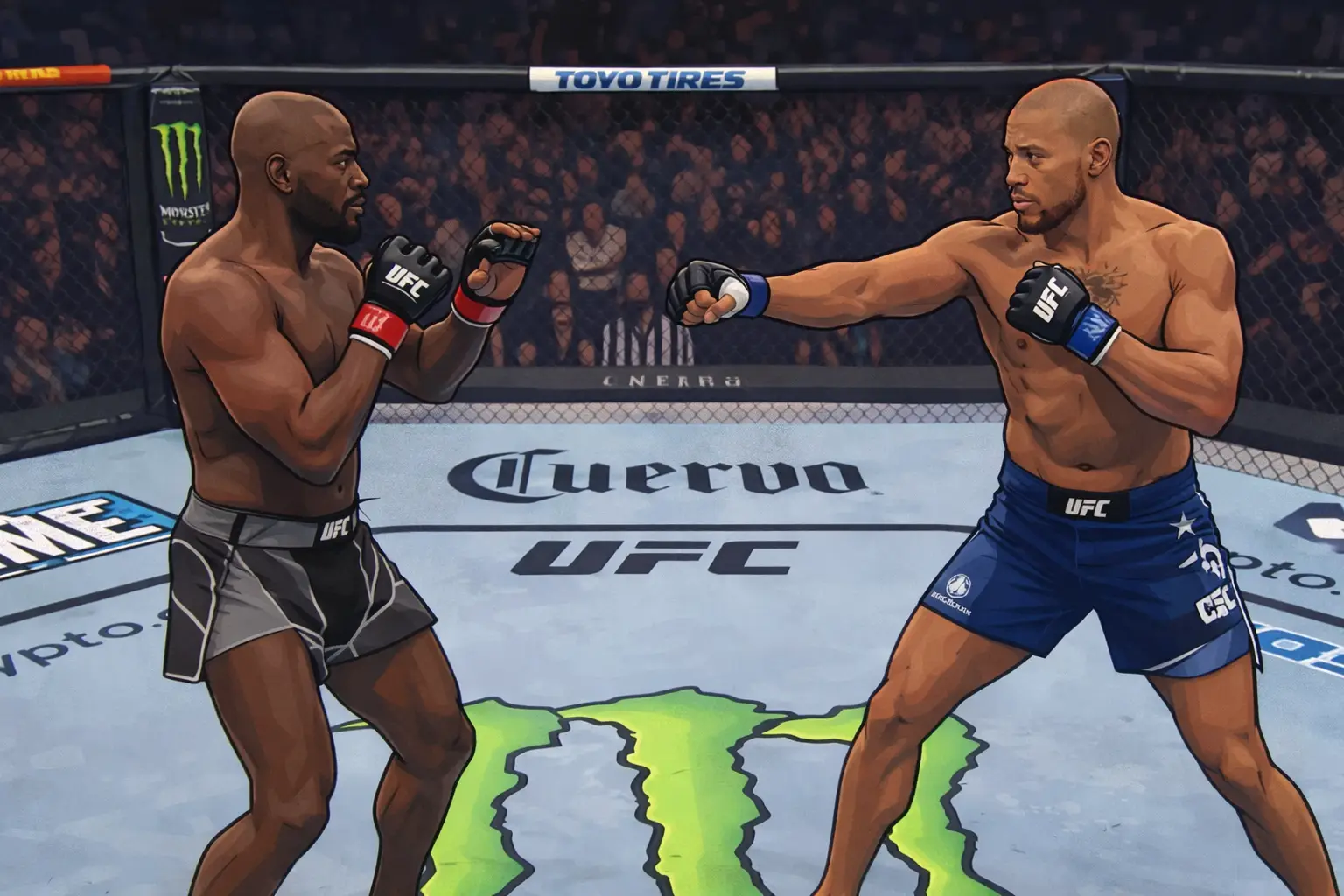
Jon Jones vs Ciryl Gane – How a Champion Solved the Fight in 2 Minutes
The Micro-Moments Behind One of the Fastest Title Fight Finishes…
Charles Oliveira vs Max Holloway II – BMF Title Fight Breakdown
The Defensive Mistakes That Cost Holloway the Fight When Max…
Arman Tsarukyan vs Dan Hooker — Full Fight Breakdown (UFC Fight Night)
The number one contender vs the veteran technician. It’s been…